From interest to a usable ticket
Browsing and cart state remain lightweight until checkout, when inventory becomes a transactional concern.
Browse→Cart→Checkout→Ticket
Platform Engineering · Event Ticketing
An East African event platform spanning public discovery, checkout-time ticket reservation, organizer operations, ticket issuance, transfer, and entry validation.
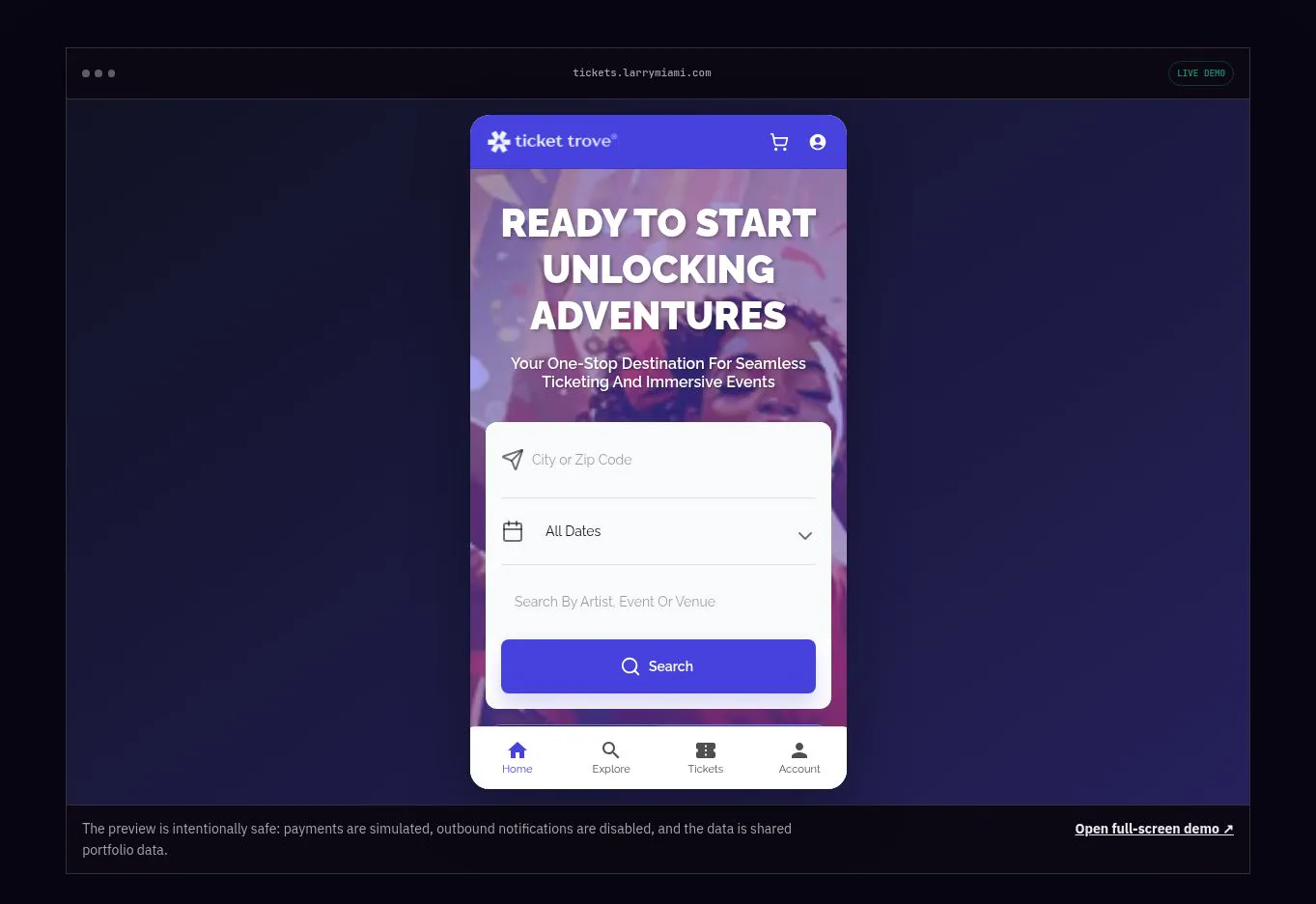
Product surface
The attendee side needs fast event discovery and a dependable checkout and ticket experience. The organizer side needs control over events, inventory, promos, holds, and operational state. Both depend on the same transaction model underneath.
Verified product evidence
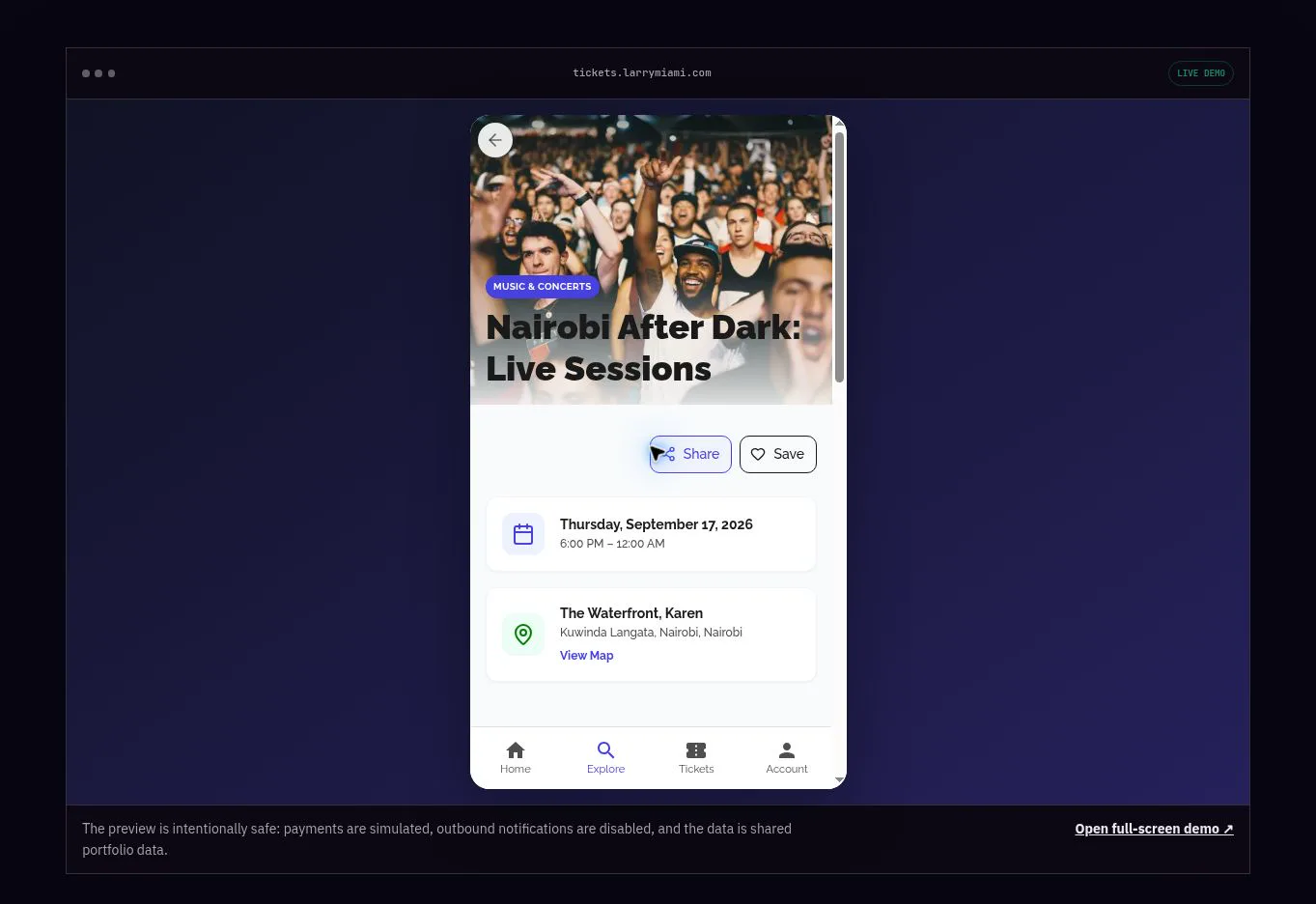
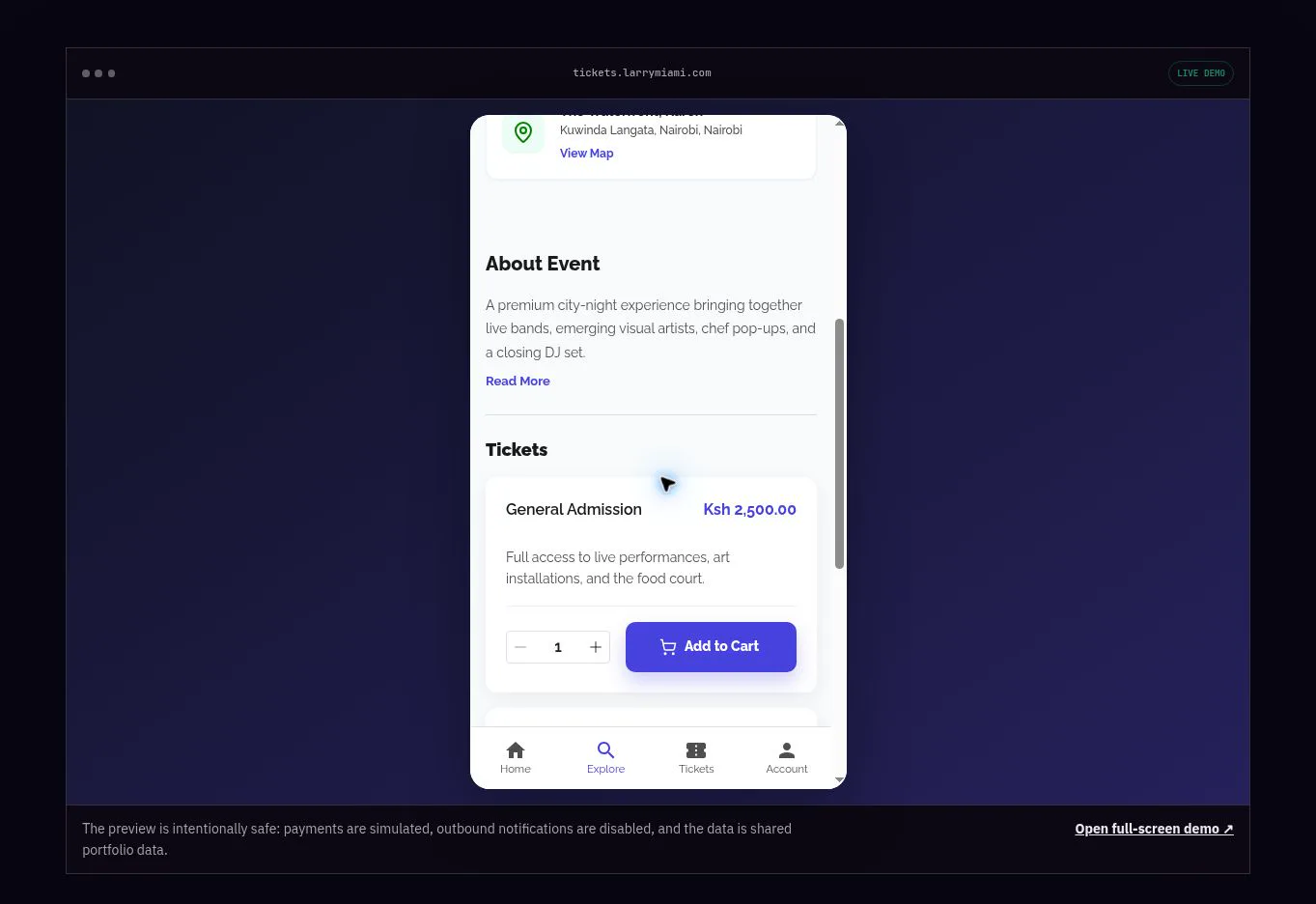
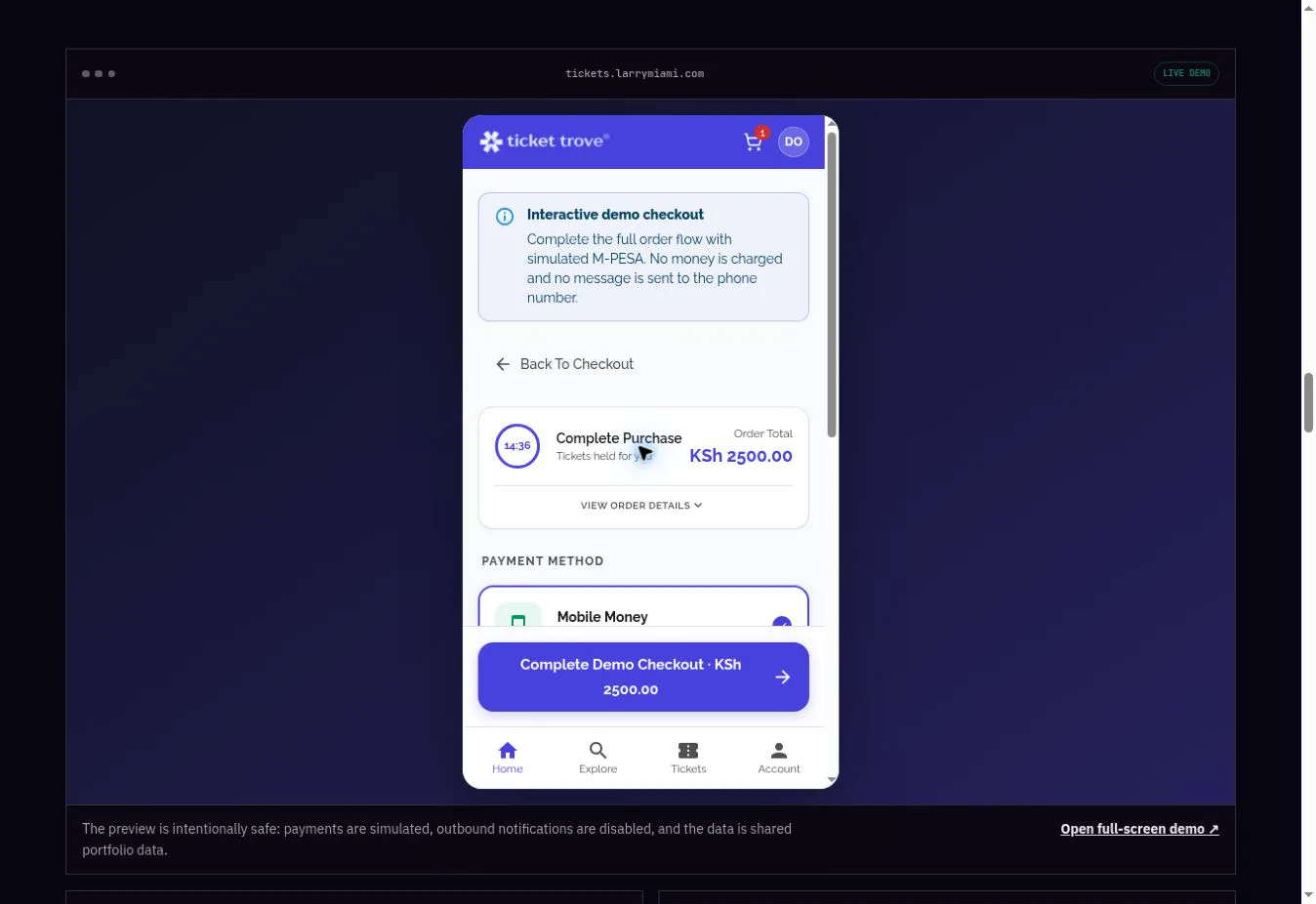
These screens document the live recruiter journey across discovery, checkout, ticket issuance, and organizer operations. They remain available when the free API is waking up.
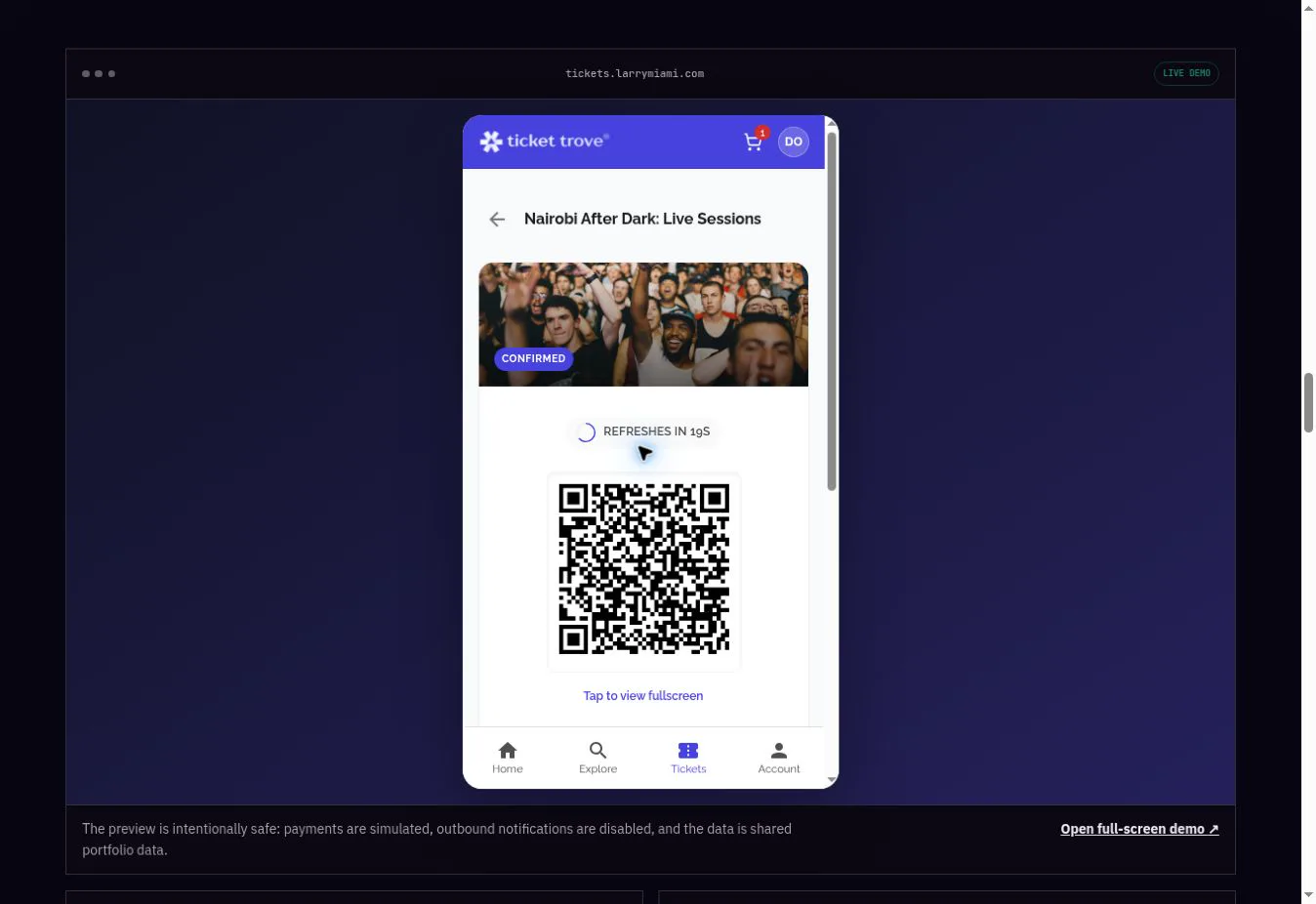
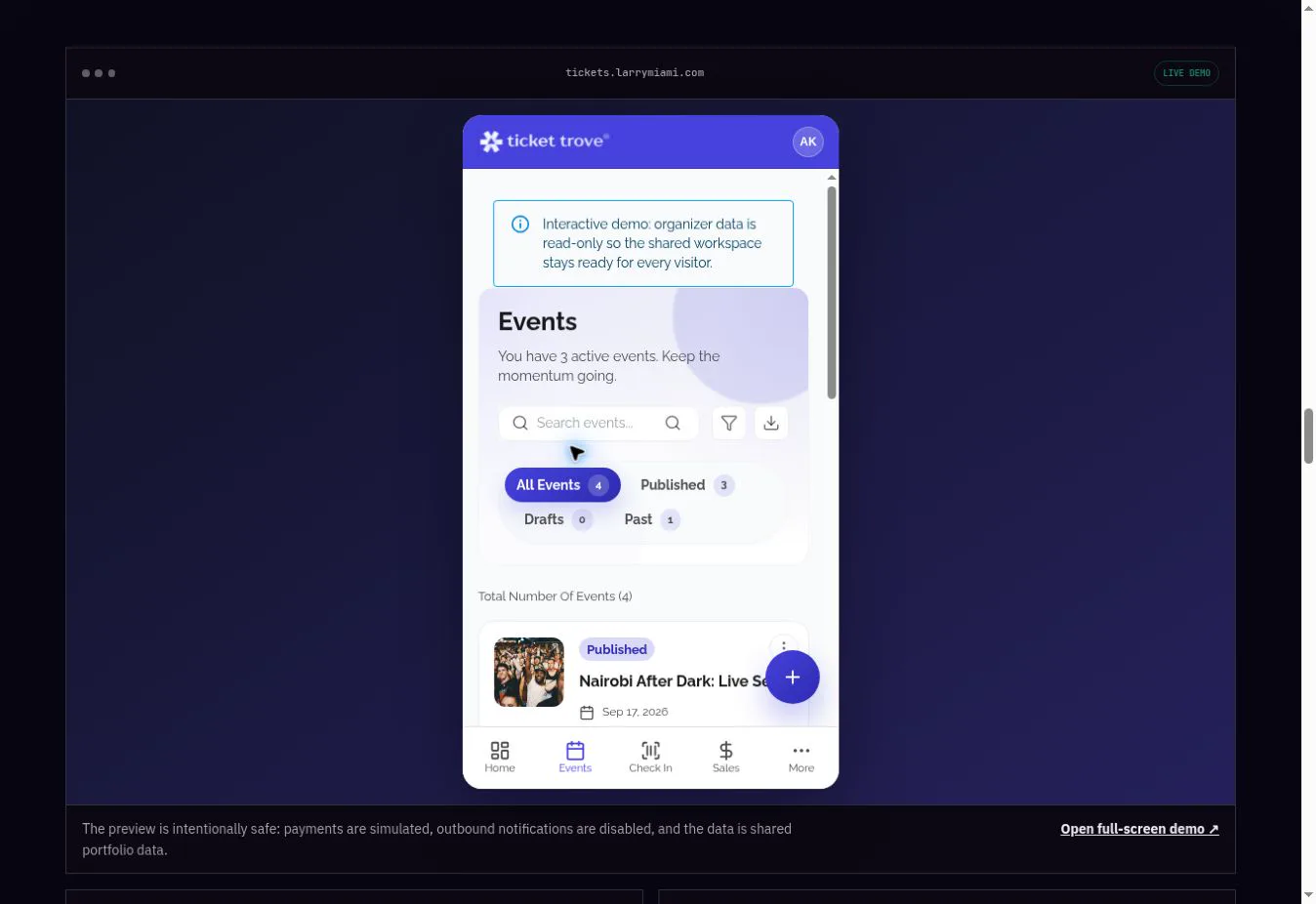
Interactive demo
Browse seeded Nairobi events, sign in with a shared attendee or organizer account, and complete a simulated checkout without leaving the case study.
System model
The system has to preserve buyer intent without overselling organizer inventory. That means cart state, reservations, orders, issued tickets, and entry scans cannot be treated as unrelated screens or CRUD records.
Three connected lanes
Each lane has different UX concerns, but the platform has to keep all three aligned around the same event and order state.
Browsing and cart state remain lightweight until checkout, when inventory becomes a transactional concern.
Redis locks, PostgreSQL transactions, order state, and ticket validation boundaries protect the same inventory from races.
Organizer tooling covers event lifecycle, ticket types, pricing, promotional rules, holds, and event-level operational metrics.
Checkout & inventory
The platform deliberately does not reserve inventory when a buyer adds a ticket to the cart. Reservation begins at checkout, where intent is strong enough to justify temporarily removing capacity from other buyers.
Order lifecycle
Redis locking and database transactions protect inventory and order state while the checkout flow moves toward completion or release.
Buyer intent only; inventory is not reserved yet.
Checkout reserves ticket capacity for the pending order.
Create the pending sale with customer and ticket context.
Complete or cancel the order through one authoritative transition.
Create ticket records only after the order reaches the completed state.
Queue ticket PDFs and buyer notifications after completion.
Frontend architecture
The frontend uses Next.js 16 with localized routes, explicit server-state and client-state boundaries, strict form validation, performance work, and an installable PWA foundation.
Frontend stack
React Hook Form and Zod handle form contracts alongside these broader application boundaries.
App Router, localized routes, public product surfaces, protected organizer routes, and SEO.
English and Kiswahili routing are part of the application model rather than a later translation layer.
TanStack Query owns server state while Zustand handles focused client-side state.
Manifest and service-worker tooling establish an installable, offline-aware browser foundation.
Backend architecture
The Fastify backend is intentionally a single deployable application, but domain modules keep authentication, event management, organizations, ticketing, and background jobs from collapsing into one undifferentiated service layer.
JWT access/refresh flows, verification paths, permission rules, rate limiting, and security-oriented Fastify plugins.
Event lifecycle, public discovery, organizer editing, ticket types, pricing, promo codes, holds, and event-level metrics.
Organizer ownership and membership boundaries keep operational access scoped to the correct organization.
Cart, checkout reservation, orders, inventory, ticket records, dynamic QR validation, entry OTPs, scan logs, and transfers.
BullMQ-backed work queues separate ticket PDF generation and buyer notifications from synchronous request handling.
Ticket integrity
Issuing a QR image is not the end of the security model. Entry validation combines short-lived QR data, a separate entry factor, concurrency protection, and scan history so the system can distinguish a valid ticket from an expired, duplicated, or wrong-event attempt.
Entry controls
The same ticket can also move between people through an explicit transfer lifecycle rather than silently editing ownership data.
Ticket UUID, short-lived TOTP data, and timestamp rotate the scannable payload.
A hashed entry OTP has its own expiry and must validate alongside the ticket QR state.
Rate limits, Redis locking, ticket state checks, and scan logs protect concurrent entry attempts.
Claim tokens, transfer limits, cancellation, history, and guest/authenticated claiming preserve provenance.
Delivery & operations
The portfolio deployment is treated as a real operating mode: CI verifies database migrations and repeatable seed data, the API remains container portable, and the Next.js frontend uses a same-origin proxy so recruiters never depend on a retired product domain.
Delivery path
Portfolio mode disables real payments, background workers, uploads, cron jobs, and outbound notifications while preserving the product's transactional checkout and ticket-issuance path.
PostGIS and Redis service containers run lint, types, tests, migrations, and the idempotent portfolio seed twice.
The production Docker build is checked on every pull request and can run on a free container host.
The public frontend rewrites API calls server-side, avoiding brittle browser CORS and exposing one memorable URL.
Simulated payments issue real demo tickets while money movement, messages, uploads, workers, and cron stay off.
Engineering evidence
The implementation repositories are private. This case study connects verified implementation evidence to the architecture, transaction model, security boundaries, delivery controls, and live product experience.
Next.js 16 App Router, English/Kiswahili routes, public event/cart/ checkout/ticket surfaces, organizer dashboard routes, PWA tooling, and the live Ticket Trove product.
Fastify modules, checkout-time reservation, Redis locks, atomic order completion/cancellation, ticket validation, transfer workflows, background jobs, and PostgreSQL migrations.
PostGIS and Redis test dependencies, Docker verification, migrations, repeatable demo seeding, frontend lint and type checks, production builds, health checks, and Sentry integration are represented in code.
Evidence boundary
The case study intentionally avoids presenting planning targets or incomplete surfaces as shipped proof.
Ticket Trove Africa
Inventory concurrency, mobile entry, language, connectivity, and organizer operations all influence the architecture.